
October 22, 2026
eGreenBadge Founder Farah Alkhateeb Featured in UAE...
Farah Alkhateeb, the founder of eGreenBadge, was recently profiled by UAE Stories...

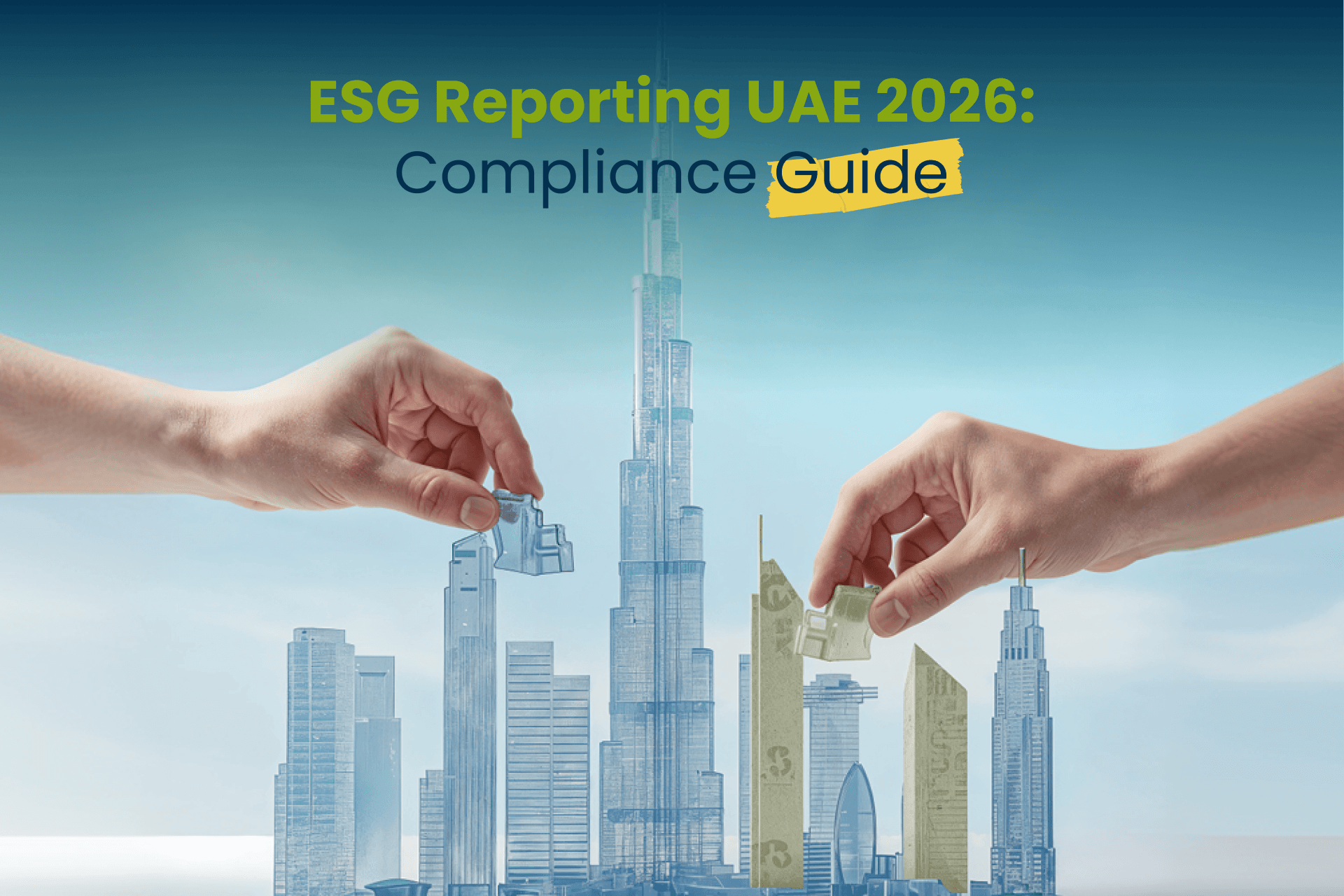
Environmental, Social, and Governance (ESG) reporting is no longer something to think about for the future; it is now a must-have for all businesses in the UAE. As the country moves faster toward its Net Zero 2050 goals, businesses in Dubai and the Emirates must adopt stricter ESG frameworks, transparency standards, and sustainability benchmarks.
As of 2026, ESG reporting in the UAE will be more organized, regulated, and linked to business performance, investor confidence, and long-term growth. Companies that don’t change risk losing their competitive edge, following the rules, and the trust of their stakeholders.
This guide provides businesses with everything they need to know about ESG reporting requirements in the UAE, what they need to do to stay compliant, and how to develop a sustainability strategy that will work in the future.
ESG reporting is when a business communicates its environmental, social, and governance practices to the public. It provides businesses with measurable information on how they affect the environment, treat their employees, and operate ethically.
In the UAE, ESG reporting has gained momentum due to:
People no longer only look at how well a business does financially. ESG reporting helps businesses:
In short, ESG reporting is now more than just a way to follow the rules; it’s also a way to grow your business.
Understanding ESG requirements that UAE companies must follow is essential to staying compliant and competitive.
Companies are expected to track and report:
The UAE government is heavily focused on reducing carbon footprints and encouraging circular economy practices.
The social part examines how businesses manage their relationships with employees, customers, and communities.
Key areas include:
Organizations are expected to demonstrate real impact, not just policies.
Governance ensures ethical business practices and transparency.
Companies must report on:
Strong governance is a key factor for ESG compliance in Dubai and across the UAE.
Dubai has become a regional leader in ESG compliance, setting standards aligned with global standards.
Companies must meet Dubai’s ESG standards in order to be compliant.
Failing to comply can lead to:
The UAE is not working alone. ESG rules are changing quickly across the Middle East, and countries like Saudi Arabia and Qatar are also working to make their economies more sustainable.
Companies in the UAE must:
The UAE is leading the region, but expectations will continue to rise.
UAE companies must use globally accepted frameworks for their sustainability reporting to be useful.
Each of the frameworks focuses on a different part of ESG, but they all want to make things clearer and easier to compare.
An ESG report of high quality should have:
Despite its importance, many businesses struggle to implement ESG.
These problems often cause reporting to be incomplete or inconsistent.
Technology is making it easier to report on ESG in the UAE.
Modern platforms allow companies to
To simplify your ESG journey, businesses can now track and report their ESG metrics automatically using advanced sustainability platforms designed for real-time monitoring and reporting.
To stay ahead, companies must adopt a strategic approach to ESG reporting.
Set measurable goals that are in line with:
By doing the following, you can make sure that your data is accurate and consistent:
Pick a framework that works with your business model and make sure:
ESG shouldn’t be separate from how things work. Instead:
Stakeholders expect honesty and clarity.
Effective ESG communication includes:
Companies that invest in ESG reporting gain a competitive edge.
ESG is not an option in 2026; it’s a key factor in business success.
In the future, ESG reporting in the UAE will keep changing in the following ways:
Companies that act quickly will be better able to change and lead.
In 2026, ESG reporting in the UAE will enter a new phase that is all about rules, openness, and responsibility. Companies need to go beyond just following the rules and start using a proactive, data-driven approach to sustainability reporting.
Companies can use ESG to their advantage by learning about ESG requirements in the UAE, following Dubai’s ESG compliance standards, and staying ahead of ESG rules and trends in the Middle East.
Companies that not only report ESG metrics but also work to make them better will be successful in the future.