October 22, 2026
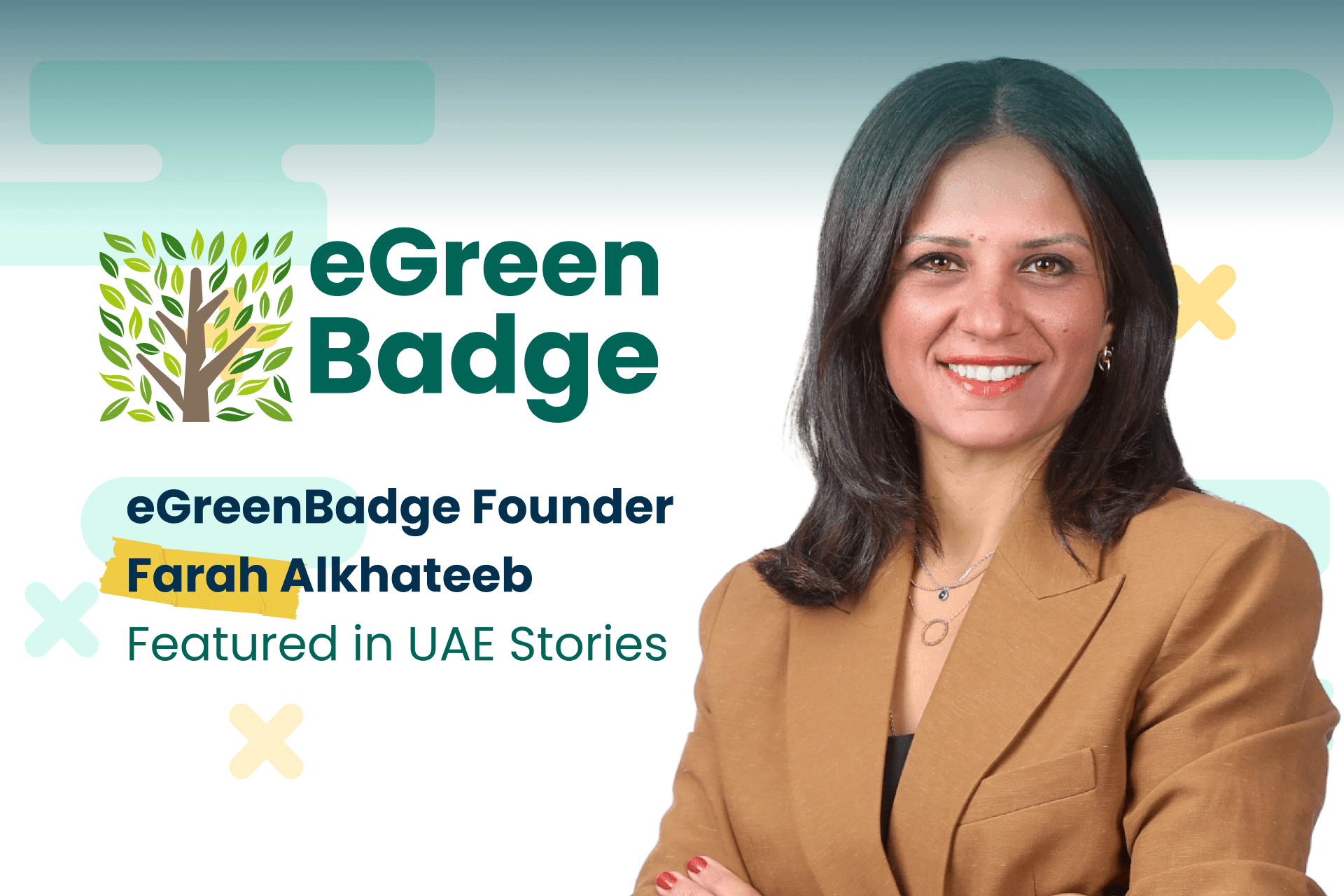
eGreenBadge Founder Farah Alkhateeb Featured in UAE...
Farah Alkhateeb, the founder of eGreenBadge, was recently profiled by UAE Stories...

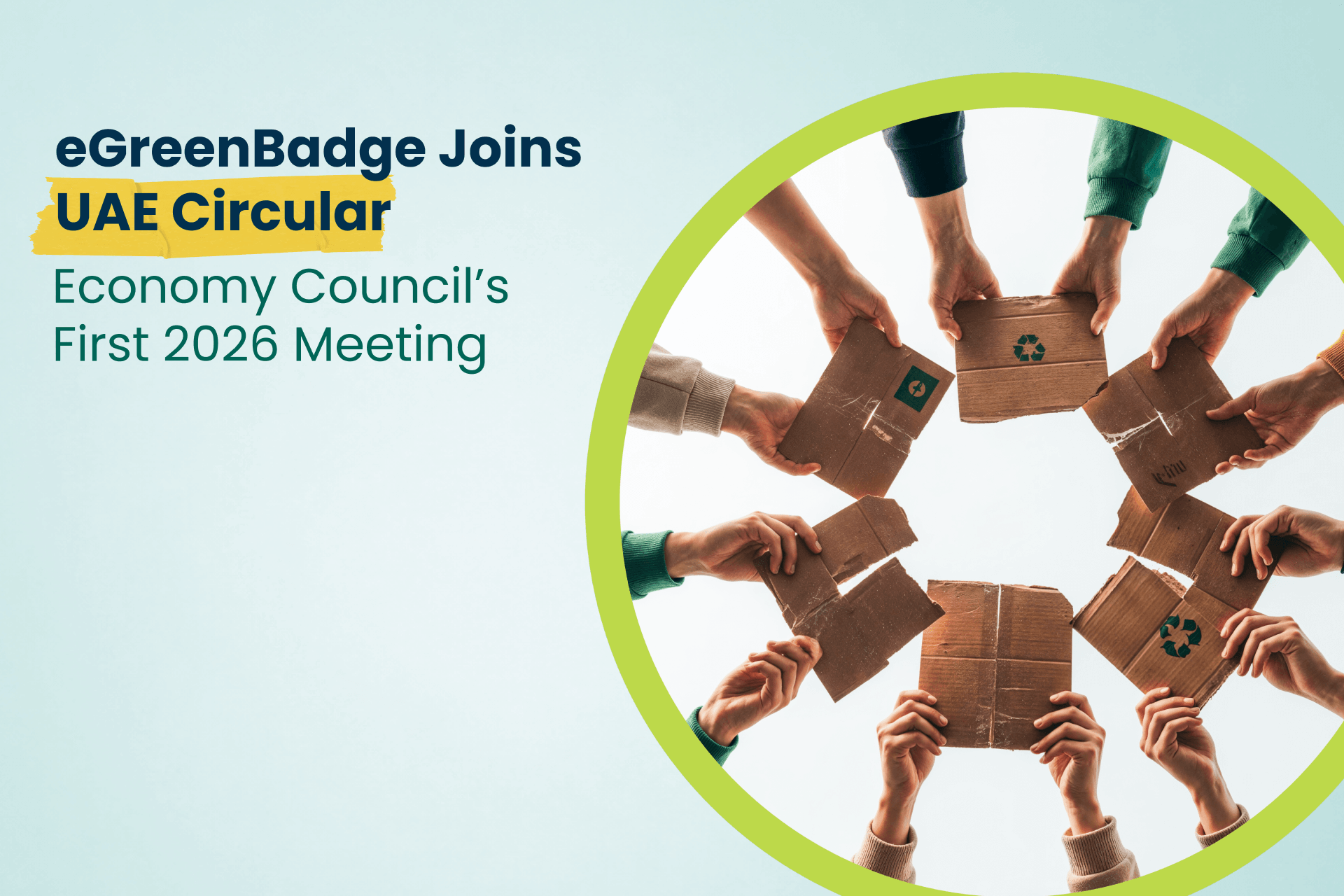
eGreenBadge took part in the UAE Circular Economy Council’s first meeting of 2026, highlighting its participation as a technology-driven initiative supporting circular economy efforts in the UAE. The meeting followed the UAE Circular Economy Agenda 2031, bringing together government, industry, and sustainability groups. Participants reviewed national strategies and talked about how innovation can help achieve long-term environmental goals.
The UAE Ministry of Economy and Tourism reported that the meeting featured a presentation on the eGreenBadge initiative, which introduces a circularity intelligence layer at the household level to encourage circular economy practices. This reflects eGreenBadge’s commitment to measurable, technology-driven progress toward the UAE’s circular economy goals.
The UAE Circular Economy Council supports the country’s long-term sustainability and economic growth. It brings together government, private sector, and key projects to create practical plans that improve resource use, cut waste, promote sustainable production, and encourage responsible consumption.
Through the Circular Economy Agenda 2031, the council helps accelerate the shift to a stronger economic model and encourages collaboration across key sectors. The agenda supports national efforts to improve environmental outcomes and backs sustainability projects that can grow over time.
Council meetings are a regular place for national discussions on sustainability in the UAE. Here, participants review progress, align on policies, and help support dialogue and alignment around circular-economy initiatives across industries.
The UAE is working to become a regional leader in sustainability and innovation by integrating environmental priorities into its long-term plans. Both public and private sectors are building systems that support ongoing sustainability and track real environmental results. This national focus has also drawn more attention to how innovation and technology can support circular-economy efforts across communities, organizations, and industries.
A main theme at the UAE Circular Economy Council meeting was the growing importance of innovation in advancing sustainability and circular economy efforts. As expectations for sustainability change worldwide and in the region, organizations are moving beyond general promises and building systems that deliver real environmental impact and lasting results.
Technology helps with resource management, recycling, environmental reporting, and tracking sustainability. Smart systems give organizations better visibility and planning. The UAE’s vision supports projects that leverage innovation to deliver measurable results in achieving circular economy goals. During the meeting, the eGreenBadge initiative was presented as a technology-based approach supporting household-level circular economy visibility and participation.
eGreenBadge participated in the meeting by presenting its technology-enabled approach to supporting circular economy engagement and visibility at the household level. The initiative uses technology and data to track post-consumer waste and household recycling, helping support wider sustainability efforts. As the focus in circular economy discussions shifts to measurable action and real sustainability, there is greater demand for systems that deliver actionable environmental insights and support sustainable planning.
Many organizations and programs still struggle to track environmental progress and participation. Without measurable systems, it’s harder to see recycling rates, monitor sustainability, and collect data for future planning and reports. Technology-based sustainability systems enable real-time measurement of environmental participation. eGreenBadge’s participation reflects a broader shift toward measurable, technology-supported sustainability practices in the UAE.
In the UAE and the region, organizations now focus on implementing measurable sustainability actions rather than simply sharing general messages. Organizations are under more pressure to show environmental responsibility, which increases the need for tracking systems and data-driven approaches.
Measurable sustainability is becoming increasingly important in circular economy plans, where cutting waste, increasing recycling, and using resources more efficiently all depend on clear, useful environmental data. As standards for environmental reporting change, technology-based systems are valuable for giving clear data on sustainability and participation across industries.
Innovation is key to scaling up. Today’s sustainability projects need flexible systems that work in different settings and keep operations measurable and visible. This focus on measurable action matches the UAE’s priorities for innovation-driven sustainability.
The UAE’s ongoing investment in the circular economy shows its long-term commitment to a greener, more resource-efficient future. The UAE promotes practical sustainability through initiatives such as the Circular Economy Agenda 2031 and collaboration among government, innovators, and businesses. More attention to technology, visibility, and measurable systems shows progress toward action-focused sustainability.
In this growing ecosystem, scalable, tech-driven projects are helping more people participate in sustainability, improve environmental visibility, and support long-term growth of the circular economy. At the council’s first 2026 meeting, the eGreenBadge initiative was presented as part of the broader conversation around innovation, measurable sustainability, and circular economy development in the UAE.