November 15, 2026
How to Track Scope 3 Emissions from...
A cardboard box is emptied. A plastic container is discarded. Packaging from...

Waste remains a business responsibility even after a product leaves the shelf. That principle sits at the heart of Extended Producer Responsibility, or EPR, an approach that places responsibility on producers throughout the product lifecycle, including use, disposal, and recovery.
For companies operating in the UAE, that matters. The country’s move toward a circular economy is shifting the conversation about waste from simply disposing of materials to understanding who is responsible for them, where they go, and what happens at the end of their useful life. Research into extended producer responsibility in the UAE describes EPR as an integral component of implementing a circular economy, particularly in the management of waste electrical and electronic equipment, or WEEE.
EPR moves some responsibility upstream. Rather than treating waste management solely as something that happens after a product is discarded, it connects producers with the environmental impact of products across their lifecycle. Research describes this responsibility as covering use, disposal and utilisation, while EPR can operate through either individual or collective producer responsibility.
That principle has practical relevance in the UAE. Federal Law No. 12 of 2018 on Integrated Waste Management forms part of the country’s regulatory framework for waste management based on EPR principles. The research identifies Articles 5 and 13 as relevant to WEEE and notes obligations concerning returned products, waste remaining after use and associated financial costs.
Cabinet Resolution No. 39 of 2021 established the Executive Regulations of Federal Law No. 12 of 2018. These regulations address the rights and obligations of authorities, waste producers and suppliers.
For businesses, some of the responsibilities identified by the research are concrete:
The wider principle behind producer responsibility recycling is therefore significant. EPR connects the parties placing products into circulation with what eventually happens to those products. It also makes recycling, collection, and end-of-life management part of a broader business conversation rather than an isolated waste-disposal issue.
There are still important gaps. Research into UAE EPR notes that legal liability and sanctions for improper fulfilment of EPR obligations require greater clarity. It also highlights challenges around defining electronic waste categories and setting clearer recycling requirements covering collection, transportation, treatment, material recovery and final disposal.
This distinction matters when businesses research terms such as EPR packaging UAE or EPR regulations Dubai. EPR obligations should not be assumed to apply identically to every product, material or jurisdiction. Businesses need to establish which requirements apply to their waste streams and activities rather than treating EPR as one universal checklist.
Knowing that waste has been collected is one thing. Establishing what happened to it is another.
That becomes particularly important as EPR places greater attention on the lifecycle of products. Research into UAE electronic waste management identifies a significant information problem: reliable recycling data remain limited, while the characterisation, quantification and movement of electronic waste are described as unclear.
Another UAE study identifies difficulties in tracing the lifecycle of electrical and electronic equipment and comprehensively evaluating how those products are disposed of. It also identifies the absence of an extensive electronic waste registry separating assessment and recycling rates by equipment category.
The proposed response is telling. Researchers suggest specialised registries that could monitor:
This is where recycling data becomes commercially important. Waste management research in the UAE also points to incomplete waste tracking systems and limited historical data. At the same time, another study found insufficient reliable electronic waste data to be a significant management problem.
For companies addressing EPR in the UAE, better visibility can therefore reinforce the evidence behind their recycling activities. Instead of viewing recycling simply as a completed operational task, businesses can pay closer attention to measurable information about the materials entering their recycling systems.
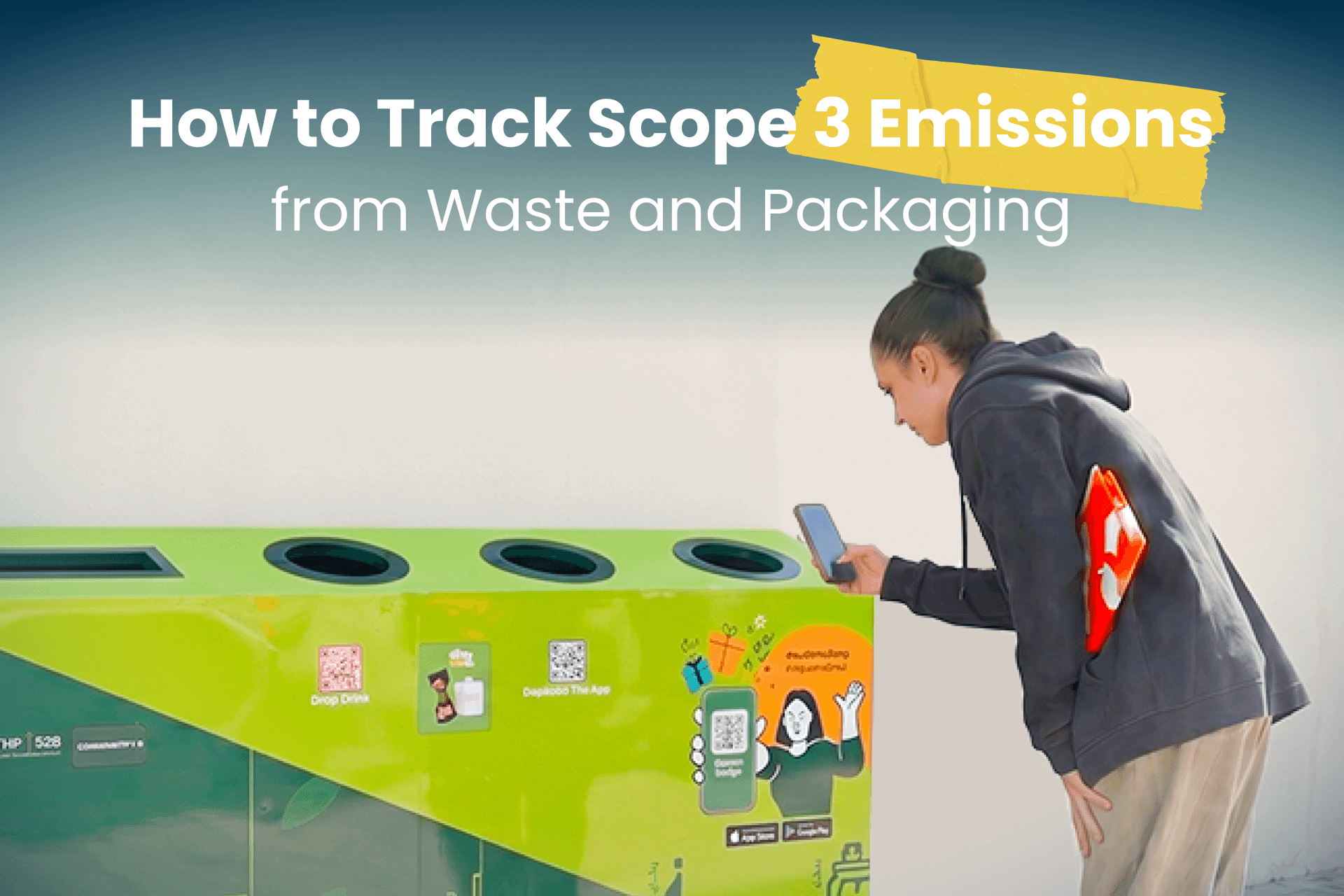
This is where technology can address a very practical business need. eGreenBadge combines artificial intelligence, smart bins and real-time analytics to turn recycling activity into measurable data. Its platform tracks the type and volume of recycled materials, waste diversion, recycling efficiency, user engagement, and carbon-reduction metrics.
The platform records recycling interactions and provides company and product-level data, including packaging impact and end-of-life emissions. Businesses can also access sustainability dashboards, use recycling data to inform packaging strategies, monitor waste diversion, and support ESG reporting.
That creates a clear connection between physical recycling activity and the information businesses need to understand it. Companies can:
For businesses navigating EPR, visibility matters because responsibility is much harder to demonstrate when the underlying waste journey cannot be measured. Meet your EPR compliance with verified recycling data and turn recycling activity into information your business can actually track.
EPR UAE’s direction is ultimately part of a much larger shift. Products are increasingly being discussed in terms of their complete lifecycle rather than simply their point of sale. UAE research also links the transition to a circular economy with systemic change involving government, businesses and society, supported by monitoring and control mechanisms.
For businesses, that puts a premium on knowing what happens after materials become waste. Collection matters. Recycling matters. But increasingly, the data that makes those activities visible matters too.