November 15, 2026
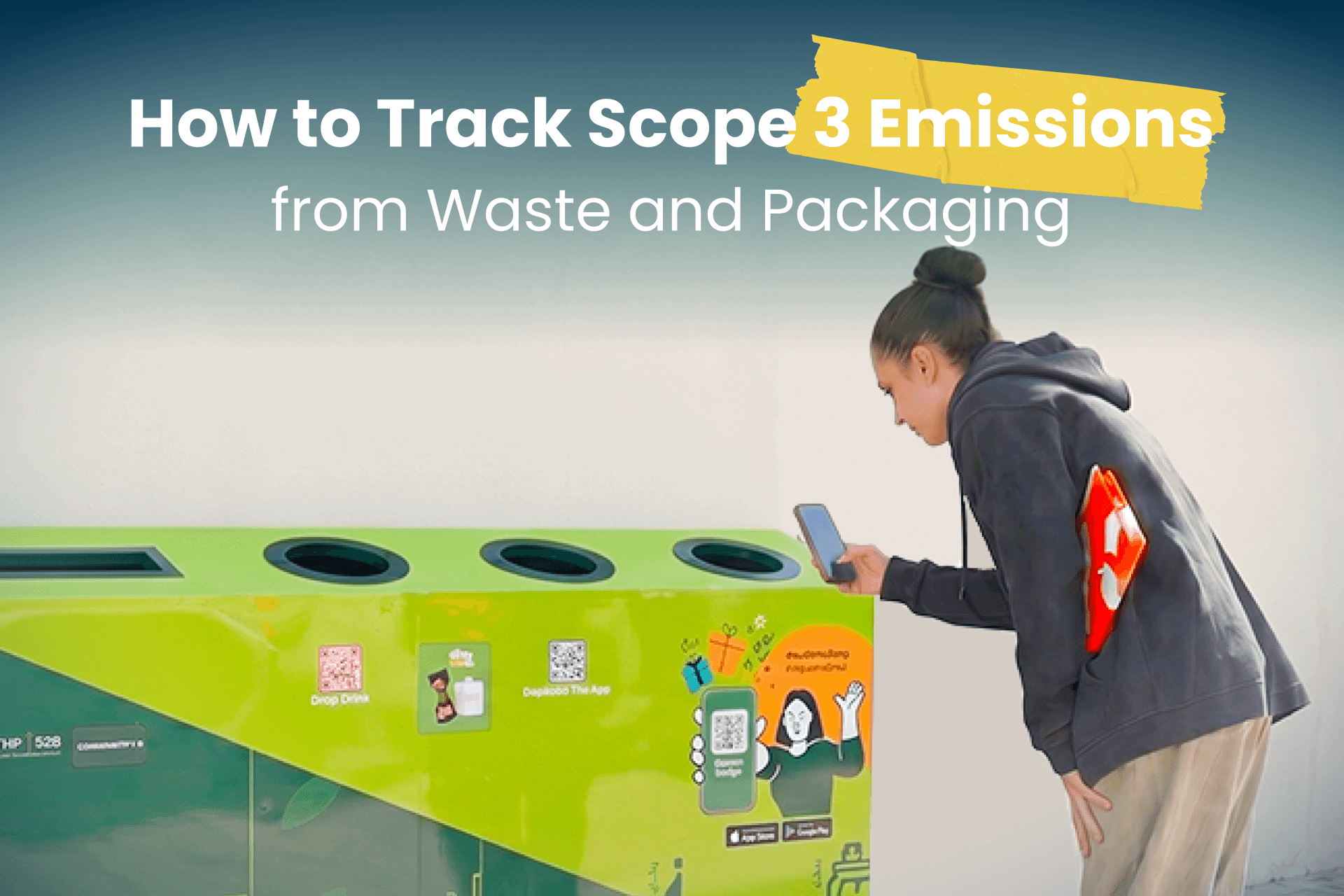
How to Track Scope 3 Emissions from...
A cardboard box is emptied. A plastic container is discarded. Packaging from...

Sustainability in the UAE has become central to the country’s economic and environmental future. The UAE Net Zero 2050 Strategy sets a national framework to cut emissions across six key sectors: energy, industry, transport, buildings, waste, and agriculture.
This direction ties sustainability more closely to the everyday decisions of government entities, businesses, and communities. Cutting emissions, using resources more efficiently, and recovering recyclable materials help turn national goals into tangible results.
That is why it helps to see environmental sustainability as an interconnected system. Waste management, for example, doesn’t end once waste is collected and disposed of. Recovering materials and returning them to use supports the circular economy and keeps resources valuable for longer. This is where eGreenBadge comes in, bringing individuals, businesses, recyclers, data, and technology together in a single ecosystem.
The UAE Net Zero 2050 Strategy clearly shows the scale of the country’s ambition. It builds on the Strategic Initiative for Net Zero 2050, launched in 2021, and the National Net Zero Pathway, launched in 2022, which sets the timeline and mechanisms for phased implementation.
The strategy includes more than 25 programmes covering the six main sectors. Its priorities include improving efficiency, expanding renewable energy, increasing the share of clean energy, and moving toward sustainable transport and green buildings, alongside nature-based solutions and carbon capture technologies.
Alongside the net zero strategy, the UAE National Climate Change Plan 2017 to 2050 sets out goals showing how sustainable development connects to the climate and the economy. They include:
These goals give businesses a practical way to contribute to sustainability in the UAE. When managing resources, waste, and environmental data becomes part of daily operations, it becomes possible to track results and improve practices based on clear data.
The fact that waste is one of the six sectors covered by the UAE Net Zero 2050 Strategy underlines how important materials management is to the country’s path toward lower emissions.
Recycling becomes more effective when clear data show what materials have been collected and recovered. eGreenBadge points out that one of the challenges it aims to address is the lack of transparency and traceability in material recycling, which can affect how effectively materials are recovered and slow progress toward a circular economy in the UAE.
Its vision is built on bringing different elements together in one connected ecosystem:
In this way, waste handling becomes part of a wider cycle that aims to preserve the value of materials and return them to use instead of losing them.
How eGreenBadge supports the UAE’s sustainability goals becomes clear in the way it turns goals around recycling and material recovery into practices that businesses and communities can apply, and whose impact they can follow.
Strategies set the direction, but businesses and communities need tools that connect recycling activity to clear results and traceable data. eGreenBadge says it is building a connected ecosystem in which homes, businesses, and recyclers all play a part in turning waste into a valuable resource. It also gives businesses data to measure impact, improve material recovery, and work toward their sustainability goals.
This approach shows up in several practical areas:
eGreenBadge also runs the Million Drop Challenge, which relies on smart recycling hubs in offices, university campuses, and community centres. The aim is to make recycling easier and more accessible, and to link participation to measurable community impact.
Businesses can start contributing to sustainability in the UAE with practical steps inside the workplace. Managing the materials consumed on site, making sorting easier, increasing employee participation, and tracking recovered materials all make sustainability part of everyday operations.
This focus on private-sector participation is consistent with the National Climate Change Plan, which places innovative solutions and cooperation with the private sector within its path toward greater economic diversification.
To turn this into a practice that can be tracked, businesses can focus on three priorities:
This fits the eGreenBadge model, which connects people, infrastructure, and data, and gives businesses the data to help them measure impact and improve material recovery.
UAE sustainability goals range from cutting emissions to improving resource efficiency and building an economy better able to face climate challenges. National plans make clear that achieving these ambitions depends on cross-sector collaboration and the participation of the private sector and the wider community.
In this context, solutions that make impact measurable have real practical value. When a company can see how much material has been recovered, boost participation in recycling, and use data to track results, sustainability shifts from a broad aim to clear actions that can be carried out and followed up. This is where national ambition meets eGreenBadge’s role: making material recycling clearer and more traceable, and connecting individuals, businesses, and recyclers in an ecosystem that supports resource recovery and the circular economy in the UAE.