August 19, 2026
Where to Recycle in Dubai: Drop-Off Locations...
A recycled bottle at the office, a stack of cardboard at home,...

Recycling app rewards can work, but only if the right conditions are met. People have to be able to obtain their rewards quickly, and the bins should be near at hand to ensure convenience. The real difficulty lies in maintaining people’s interest after the first few months. Since cashback and badges are now incorporated into waste collection just as they were with step counters, sustainability teams will be keeping a close eye on this through 2026.
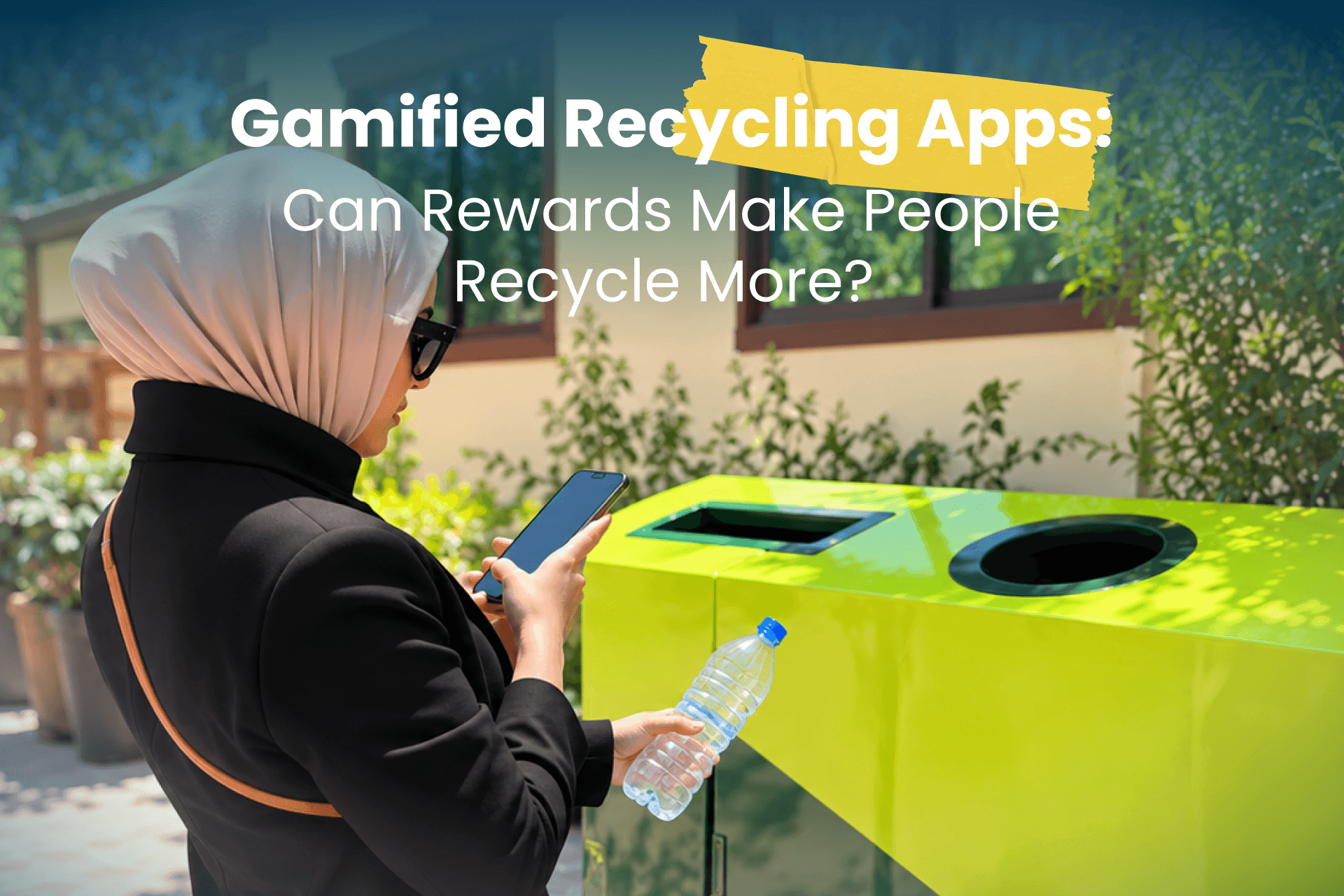
The process is simple: you need to scan an item, put it into a smart bin, and then get a reward.
The recycling rewards app regards each disposal as a transaction that has to have proof before a reward is given. Most of the platforms operate in a similar way.
The number of points assigned to different items is generally not the same and shouldn’t be. Since recycling centers offer different values for aluminum, PET bottles, and used electronics, paying the same amount for all items only encourages people to recycle the ones that are easiest to do so. Offering more points for some materials causes people to recycle those which are most valuable.
Proof is what sets this apart from a regular loyalty program. If no one checks whether the bottle went into the right bin, the points reward good intentions. Connected bins and AI sorting help solve this problem, which is why most recycling incentive programs need hardware to support the app.
Gamified recycling mainly targets a lack of feedback. When you put a bag out, you usually get nothing back. No validation, no numbers, no notion of whether it was useful. Recycling gives you immediate feedback via points, streaks, and progress bars.
Research on habits shows the same key points: the action should be easy, the reminder should always be in the same place, and feedback should come right away. A good app covers all of these, since the bin acts as the reminder, scanning is quick, and the reward appears before you leave.
One more thing is competition. Leaderboards between office floors often get more people to participate because the pressure is public. People who don’t read emails about waste policies may still check to see if their team is behind schedule.
Rewards are much better at getting people to start recycling than at keeping them interested. The first reward, like a voucher, usually works to get someone started. But after six months, that reward often loses its appeal. There are three common patterns to watch for.
Motivation crowding is especially important. If people recycle only for the reward, taking it away can actually lower participation compared to before. This shows why rewards should be combined with lasting motivators, like personal impact data and a sense of shared progress, rather than used alone.
Programs that keep users after the first month usually succeed by getting several small details right. No single feature is enough on its own.
The last point is often overlooked. People judge a consumer app by how it feels to use, but the app gets renewed based on the data it provides to those funding it. Verified recycling numbers and material breakdowns are what keep the budget approved after the pilot phase.
Download numbers don’t tell the whole story, so reports should focus on other data. For example, how many users actually recycle for the first time, what the repeat rates are at 30 and 90 days, and how clean the recycling streams are. It’s better to have a smaller group that keeps coming back than a large group that forgets about the app after installing it.
The UAE is a good place for this model to succeed. Net Zero 2050 goals and stricter producer responsibility rules are already encouraging companies to track their waste, and the population is young and used to using apps.
Adding rewards is less expensive than it might seem because one platform can manage both user engagement and compliance, since proof is already necessary. While the procurement staff examines the audit trail behind the scenes, residents see their points.
For a household, the question is more ordinary. Rewards make the right bin the obvious one and give you something to show for the walk. If you want to test that on the packaging already leaving your kitchen each week, download the eGreenBadge app and start earning rewards.
Yes, but only up to a certain limit. Rewards are able to draw in people who previously never recycled and also cause regular recyclers to recycle more frequently, provided that the bins are close by and the app is quick. Yet rewards cannot cure a defective collection system and are generally not sufficient by themselves to keep people engaged.
Imagine the reward is an invitation. Once somebody has sorted their recycling correctly ten times, the habit generally continues, and the points then act as a bonus rather than the primary motivation.