
October 22, 2026
eGreenBadge Founder Farah Alkhateeb Featured in UAE...
Farah Alkhateeb, the founder of eGreenBadge, was recently profiled by UAE Stories...

Zero waste starts with visibility, not with just recycling bins. Organizations may establish collection points and sustainability standards, but they usually lack information about what happens to discarded objects. It is difficult to measure, improve, and report on environmental obligations without solid data.
The eGreenBadge recycling platform fills this gap by combining artificial intelligence, smart collection points, digital tracking, and clear sustainability insights. Organizations can monitor material flows and convert daily recycling actions into trackable progress.
Many organizations have strong sustainability aims but limited waste data. Recycling programs usually rely on manual reports, inconsistent participation, and disconnected collection systems.
This creates several common problems:
• No accurate record of recycled materials
• Limited insight into employee participation
• Difficulty measuring landfill diversion
• Contamination caused by incorrect sorting
• Incomplete data for ESG reporting
Facilities teams may track the number of bins collected, but regularly lack details on the contents or improvements in recycling habits. As a result, sustainability teams must estimate outcomes rather than demonstrate them. A digital recycling system provides a stronger foundation by capturing activity at the source.
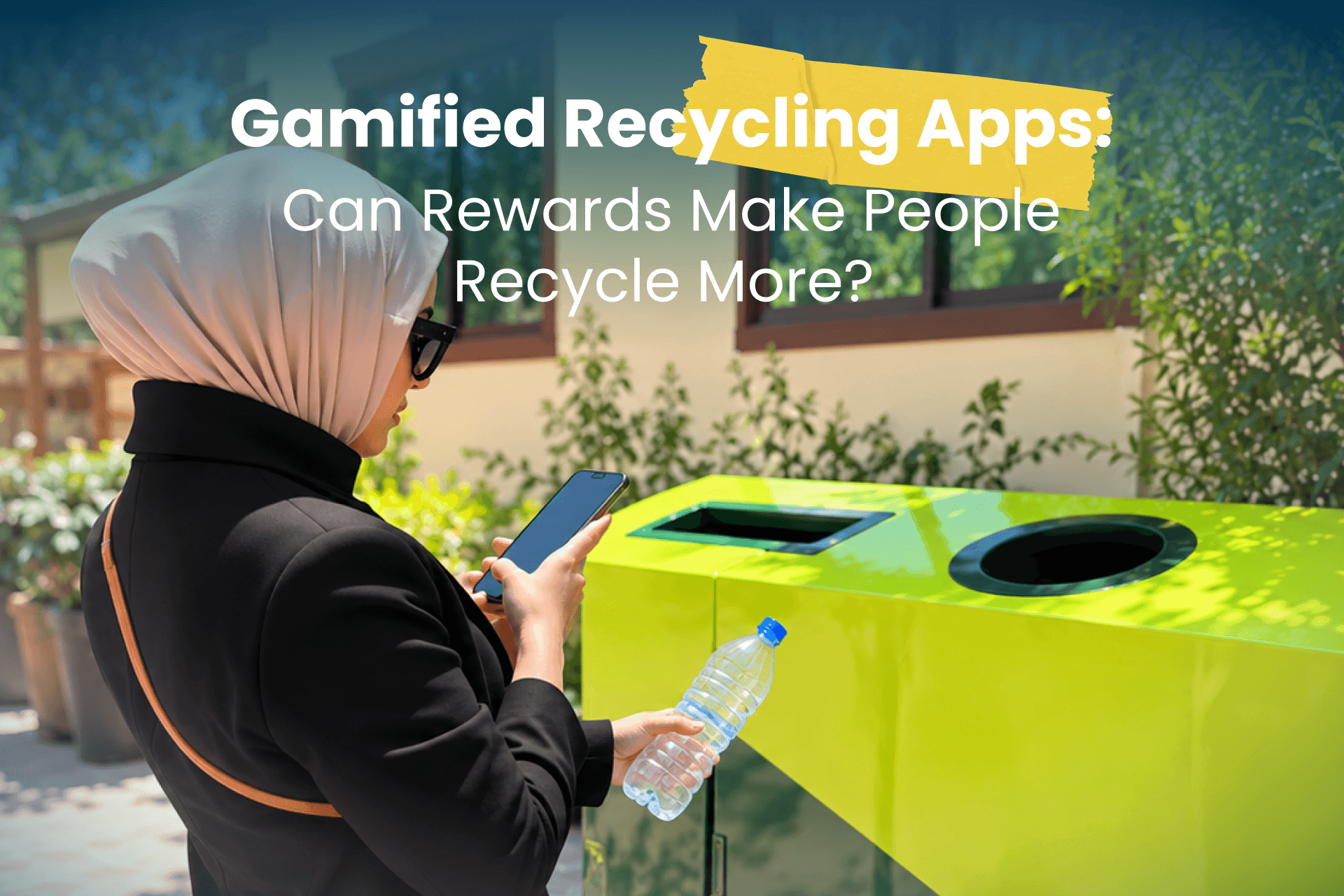
The eGreenBadge app allows users to scan recyclable items and confirm drop-off at connected collection points. Every engagement creates a digital record with material type, location, volume, and recycling action.
This gives organizations a clearer picture of performance among offices, campuses, communities, and other locations. Rather than depending only on collection totals, teams can see how users engage with recycling projects and how their actions advance wider sustainability objectives.
This traceability also benefits companies seeking recycling-tracking software in the UAE. It enables better business decisions by providing managers with information on high- and low-performing centers, commonly recycled materials, and participation levels.
A zero-waste strategy needs more than a target. It requires milestones to determine progress.
The eGreenBadge recycling platform can help teams track:
• Total recyclable items recorded
• Confirmed recycling drops
• Participation by location
• Connected bin activity
• Types and volumes of materials
• Waste diverted from landfill
• Estimated carbon reduction
These conclusions replace broad promises with measurable evidence. Organizations can compare performance across periods to assess the impact of recycling campaigns and revise their methods based on actual behavior.
This approach makes zero-waste planning more manageable. Instead of waiting for an annual report, teams review progress regularly and respond before small gaps become long-term problems.
Technology alone cannot create a zero-waste culture. People need to understand what can be recycled, know where to take it, and feel that their actions have value.
The eGreenBadge app makes participation more visible and engaging. Users log recycling actions, confirm deposits at QR-enabled collection points, and connect each item to a wider environmental impact.
Organizations can use this participation data to create more relevant engagement activities. They may introduce team challenges, recognize active departments, share monthly impact updates, or set targets for individual locations.
These projects make sustainability a daily habit, giving employees and community members a feeling of ownership through integrating their actions into a common, measurable goal.
Contamination creates one of the biggest barriers to successful recycling. Unsuitable items in a collection stream can make recyclable materials harder or more expensive to process.
eGreenBadge helps users sort waste more precisely through detecting items and guiding disposal with artificial intelligence. The app informs users before items reach the collection system, which enables businesses to build cleaner material streams.
Better sorting can lead to:
• More productive processing
• Fewer rejected recyclables
• Higher material recovery value
• More dependable environmental data
Organizations pursuing zero waste need quality recycling streams. Collecting more items alone does not achieve results if materials cannot be recovered. The quality of each recycling stream matters just as much as its volume.
Environmental reports need reliable evidence. Organizations now must explain what they intend and how they measure progress.
As an ESG tracking tool for waste-related performance, eGreenBadge can connect daily recycling activities with indicators relevant for sustainability reporting. These may include landfill diversion, material recovery, participation, carbon reduction, and Scope 3 impact.
Real-time dashboards make information easy to access. Sustainability teams monitor results without manual reports, while management sees recycling impact.
Verified data additionally strengthens communication with employees, customers, partners, and other stakeholders. Organizations support environmental claims with evidence and present a clearer account of their progress.
Data delivers the most value when teams act on it. The eGreenBadge recycling platform enables organizations to detect weaknesses in their recycling systems before problems escalate.
Low participation may need better collection points. Variances may show users start but don’t finish. Repeated errors may indicate that employees need more guidance.
Instead of applying uniform solutions, organizations tailor improvements to each site’s needs. This method focuses efforts and directs resources where they will achieve the greatest impact.
An effective eGreenBadge review assesses how well the system connects people, collection infrastructure, and environmental data.
Organizations might want to consider:
• Easy to use for staff and members of the community
• Correctness of material identification
• Visibility of the location
• Sustainability dashboards quality
• Capability to measure landfill diversion
• Value of ESG reporting
• Potential for long-term participation
The platform’s value comes from connecting these parts. The app prompts action while collection points confirm activity, then dashboards transform recycling behavior into useful insights.
Zero-waste progress requires a repeatable system that scales with the organization rather than relying on a single campaign.
A business often starts with one office, department, campus, or community. Once the business establishes itself, it expands the process to other locations, enabling performance comparisons and the development of consistent standards.
Over time, collected data guides decisions about recycling infrastructure, employee education, supplier engagement, packaging, and resource recovery partnerships.
Such scalability continues to be valuable for organizations with multiple facilities. Leadership gains a consolidated view of performance, while local teams can address participation patterns and recycling challenges specific to their locations.
To achieve zero waste, organizations must understand what they discard, what they recover, and where they need improvements. The eGreenBadge platform links these data to actual recycling activity.
Organizations use the eGreenBadge app, intelligent material identification, connected collection points, and real-time reporting to simplify and measure recycling. These tools reduce contamination, track landfill diversion, support ESG reporting, and increase environmental accountability.
Most importantly, the platform turns zero waste from a broad promise into visible actions. Each scan, drop, and material record gives a clearer picture of progress and equips organizations to improve performance and demonstrate environmental impact.
Book a demo to see how eGreenBadge works and see how measurable recycling can assist your organization’s zero-waste goals.