
October 22, 2026
eGreenBadge Founder Farah Alkhateeb Featured in UAE...
Farah Alkhateeb, the founder of eGreenBadge, was recently profiled by UAE Stories...

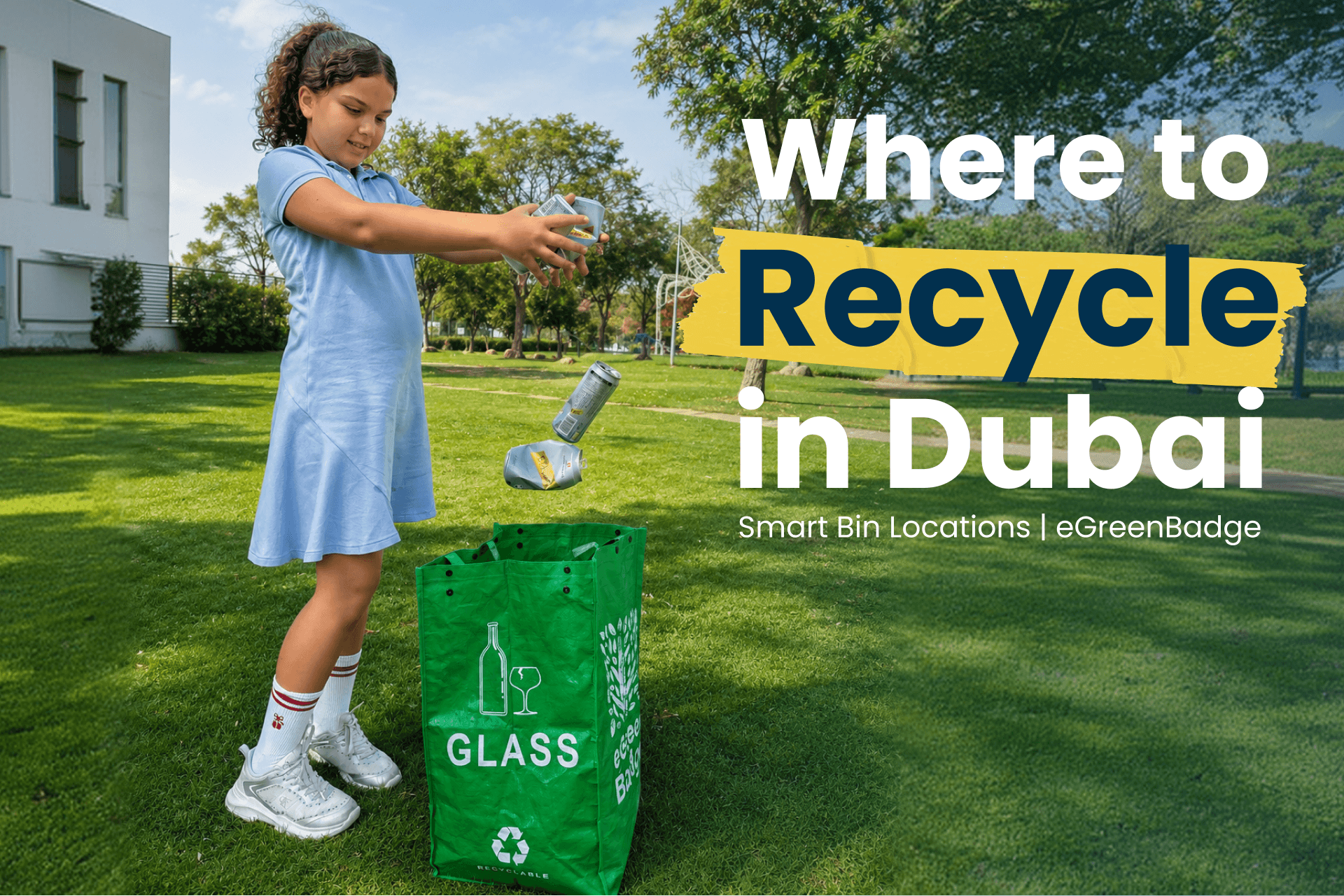
A recycled bottle at the office, a stack of cardboard at home, and an old charger stored in a drawer all require different recycling methods. For those unsure where to recycle in Dubai, the best option is to choose a recycling spot that fits into our everyday routine. By choosing a recycling point near home, work, school, or a shopping center you visit often, it becomes easier to dispose of responsibly.
People also wish to know which materials are acceptable, how items should be prepared, and whether all items placed in a recycling bin will be treated properly. The guide outlines the principal facilities available, the role of smart technology, and simple habits to help avoid contamination.
The growing population of Dubai, its vibrant consumer economy, and ongoing urban expansion generate substantial everyday waste. Instead of having reusable materials such as paper, plastic, glass, and metal recycled and put back into use, they are sent to a landfill, where they are taken out of circulation.
Regular recycling can help to:
• Reduce waste sent to landfill
• Limit environmental pollution
• Conserve raw materials and natural resources
• Lower the energy needed for some manufacturing processes
• Support wider sustainability and circular economy goals
The circular economy is based on reducing waste, reusing materials whenever possible, and recycling products when they have finished serving their present purpose. Correctly sorting waste enables households and businesses to contribute to resource efficiency in the UAE.
The recycling facilities in Dubai generally meet two requirements. The first of these is to provide a means of disposing of waste while people are away from home. The recycling bins residents in Dubai see in parks, malls, streets, and offices, as well as other public areas, are generally meant for everyday items such as bottles, cans, paper, and cups.
A second type of facility can handle greater amounts of household or community recycling; it may consist of recycling cages, collection stations, or special centers where several kinds of material can be deposited on a single visit.
Not all recycling locations accept the same kinds of materials. Some recycling points take paper, plastic, and metal, whereas others also accept glass, electronic items, batteries, and larger quantities of cardboard. It is important to read the labels before using a bin.
Among the recycling points Dubai residents can access are:
• Residential communities with shared recycling cages or collection areas
• Municipal facilities that accept selected materials
• Shopping centers and public spaces with clearly labeled bins
• Private sustainability programs operated by businesses or community groups
• Smart recycling stations that use sensors, codes, or digital tracking tools
The most useful recycling points are usually the ones that are easiest to reach. For example, a recycling station close to a supermarket will work well for weekly household recycling. In contrast, a public bin near an office is better suited for bottles, cans, and paper used during the day. Selecting a convenient position helps make recycling a regular habit.
The type of material is generally used to mark recycling bins, and in some places, color coding is also used. It is better to consult the instructions on the bin rather than rely solely on its color, since systems can vary from one location to another.
Commonly accepted household materials include:
• Clean paper and cardboard
• Plastic bottles and containers
• Glass bottles and jars
• Metal cans and aluminum packaging
Recyclable materials must be empty and reasonably clean, as food scraps, liquids, and general waste can spoil the collection and make sorting more difficult. Cardboard boxes should be flattened to save space, and lids and labels should be handled at the recycling point.
The Dubai communities are introducing digital tools to make recycling collections more efficient. The system may involve sensors that measure capacity, QR codes that record activity, or a digital platform that displays recycling information.
These features enable collection teams to know when bins need emptying, reduce unnecessary trips, and provide data on recycling patterns; they can also give residents a clearer idea of the services available.
For easier searching, use the dedicated locator to find smart recycling bins near your location. Selecting a nearby bin makes it easier to incorporate recycling into your current journey.
Residents can use online maps and location-based services to find nearby facilities. For example, if a person searches for recycling centers near me in Dubai, the results will display community stations, municipal locations, private collection points, and smart bins, depending on the user’s location.
It is important to check beforehand for any information available regarding opening hours and the types of materials that are accepted; this is particularly useful in the case of getting rid of glass, batteries, electronic items, or a large quantity of cardboard, since these may need to be collected at a special collection point.
You should also look into the recycling facilities available in your building or community, since many residential areas have shared bins or cages which are often not clearly shown on public maps.
Electronic waste should be handled differently from regular household recycling, since mobile phones, chargers, batteries, cables, and small electronic items may contain substances that should not go into the regular paper, plastic, glass, or metal bins.
In some electronics shops, telecommunications stores, service centers, and other indoor places, you can find special collection bins. At the collection point, be sure to follow the instructions and don’t leave electronic items next to a full or inappropriate bin.
Digital systems are assisting recycling programs in tracking activity, planning collection routes, and understanding how facilities are being used; capacity sensors can warn when a bin is about to fill, while recycling data can support operational planning and sustainability reporting.
Interactive maps and digital locators can also show residents where to find suitable recycling locations, and straightforward instructions help people to sort the materials properly before they arrive. When information is improved, the experience becomes smoother, and confidence in the recycling process grows.
The first step in Dubai is to know where the recycling centers are, but the best results come from making recycling easy and linking it to a routine. At home, keep the different containers separate, rinse the items after using them, flatten the cardboard, and select a fixed day or journey for getting rid of the materials.
Residents have several options for participating in Dubai’s scheme, including community stations, public recycling bins, special centers, and smart recycling technology. As long as they select the correct facility and prepare their items appropriately, each household can contribute to reducing waste, protecting valuable resources, and help create a cleaner future for the city.